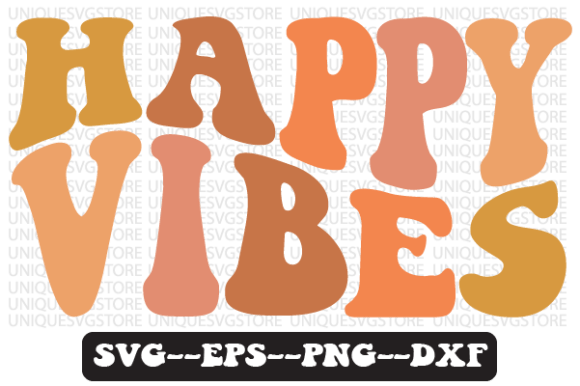
Happy Vibes Wavy Retro Svg Design Review
As a designer who has spent years navigating the messy, rewarding world of machine embroidery, I have learned to look past the pretty preview images and ask the hard questions: Will this stitch well? Is it too complex for a small hoop? Does it hold up after ten washes? When Happy Vibes Wavy Retro Svg Design landed on my desk, I immediately thought about the endless stream of custom orders that flood Etsy shops and craft fairs every week. It carries a distinct energy—groovy, relaxed, and undeniably nostalgic—but does that translate into a sturdy, professional finished product?
The first thing you notice is the mood. The wavy lines evoke a 1970s aesthetic that feels warm and inviting without being cluttered. For a brand looking to sell personalized gifts or boutique merchandise, this visual personality is gold. However, in the realm of machine embroidery design, visual appeal is only half the battle. The other half is execution. I decided to put this embroidery file through its paces to see how it handles real-world stress, from thin cotton tees to heavy-duty tote bags.
From Digital Preview to Stitched Reality
When I opened the files provided with Happy Vibes Wavy Retro Svg Design, the structure was surprisingly clean. The vector paths were logical, which is a huge relief when converting to stitches. But let's talk about the actual stitching. This design relies heavily on flowing curves rather than sharp angles. In theory, this should be forgiving on fabric, but in practice, it demands respect for thread tension and stabilizer choice.
I tested this concept on a classic project: a custom embroidered sweatshirt for a local coffee shop's holiday promotion. The "wavy" element suggested a satin stitch approach to create that smooth, retro sheen. The result was striking against the deep navy fabric. The curves flowed naturally, mimicking the movement of smoke or water, which gave the garment a dynamic feel that straight-line text just couldn't achieve. Customers stopped to touch the texture; the tactile quality of the satin stitch added a layer of perceived value that made the item feel like a premium gift rather than a mass-produced souvenir.
However, not every application works as smoothly. I also tried applying the design to a canvas tote bag intended for a craft fair vendor. Here, the challenges emerged. While the design is beautiful, the density of the waves can become tricky on textured fabrics like canvas or burlap. If the stitch density is too high, the fabric puckers, ruining the clean lines of the retro shape. Conversely, if the density is too low, the fill stitch might show gaps, making the colors look muddy rather than vibrant. This is where the importance of testing comes in before you commit to a bulk order.
Where Happy Vibes Shines Best
This design is particularly well-suited for projects that benefit from a soft, organic look. I found it perfect for baby clothes, such as a onesie for a gender-neutral nursery reveal. The gentle waves are less aggressive than geometric patterns, making them ideal for delicate skin and soft knits. When paired with pastel threads on white or cream fabric, the Happy Vibes Wavy Retro Svg Design creates a timeless piece that parents will cherish.
It also excels in home decor. Imagine this stitched onto a linen pillow cover or a kitchen towel for a wedding gift. The groovy vibe adds a touch of personality to the home without overwhelming the space. For Etsy sellers and small business owners, this is a versatile asset. You can use it for custom apparel, creating matching sets for couples or families, or even as a focal point on aprons for food trucks and bakeries. The versatility extends to digital products as well; if you are selling printable mockups or design assets, this graphic provides a strong base for showcasing your work.
Navigating the Tricky Spots
Despite its strengths, there are scenarios where Happy Vibes Wavy Retro Svg Design requires caution. One major pitfall is the size of the hoop. If you attempt to stitch this on a cap or a curved surface, the continuous wavy lines can distort easily if the curvature isn't accounted for in the digitizing process. On a tight curve, the waves might bunch up at the edges, leading to an uneven finish that looks unprofessional.
Another area to watch is dark fabric. Because the design relies on the contrast between the thread and the background to define the waves, using light threads on black fabric can sometimes cause the details to get lost, especially if the running stitch sections are too fine. I recommend doing a quick test on scrap material to ensure the thread count is sufficient to cover the base fabric completely. If the design includes tiny lettering or intricate corners within the waves, these areas might require simplification to prevent thread breaks or tangling.
For those using this for commercial embroidery, durability is key. Products that undergo frequent washing, like aprons or children's clothing, need robust stabilization. Without the right support, the wavy lines can pull and warp over time. Always check whether the design is optimized for the specific fabric texture you are using. A design that looks perfect on smooth jersey might struggle on a rough denim jacket unless you adjust the thread colors and underlay settings.
Practical Tips for the Designer
If you are ready to integrate this design into your workflow, here are some essential steps to ensure success:
- Test First: Never skip the scrap fabric test. Check how the stitch density interacts with your specific material before starting a client project.
- Stabilizer Strategy: Use a cut-away stabilizer for stretchy fabrics like sweatshirts to maintain the shape of the waves. For woven items like pillow covers, a tear-away might suffice, but always verify stability.
- Hoop Size Matters: Ensure your hoop is large enough to accommodate the full width of the wavy pattern without cutting off any curves. A cramped hoop leads to distortion.
- Thread Contrast: Experiment with different thread combinations. Sometimes a slightly darker thread on a lighter background brings out the depth of the waves better than pure white.
- Licensing Check: Before selling finished items or using this in a commercial capacity, confirm the license terms included with the download. Some designs allow personal use only, while others permit commercial sales of the final product.
Ultimately, Happy Vibes Wavy Retro Svg Design is a fantastic tool for creatives looking to add a touch of retro flair to their portfolio. It strikes a balance between trendy aesthetics and functional embroidery potential. Whether you are crafting a unique gift for a loved one or building a line of small shop products for your online store, this design offers a solid foundation. Just remember that good results come from understanding the limitations of the medium. Take the time to prep, test, and refine, and you will find that this groovy little design can elevate your work from simple crafts to standout handmade products.
In the world of Crafts and Graphics, having a reliable design library is essential. This piece fits comfortably alongside other classics, offering a fresh take on vintage styles. It reminds us that while trends change, the core principles of good design—balance, clarity, and durability—remain constant. By approaching this embroidery project with a critical eye and a practical mindset, you can turn a simple digital file into a cherished physical object that stands the test of time.