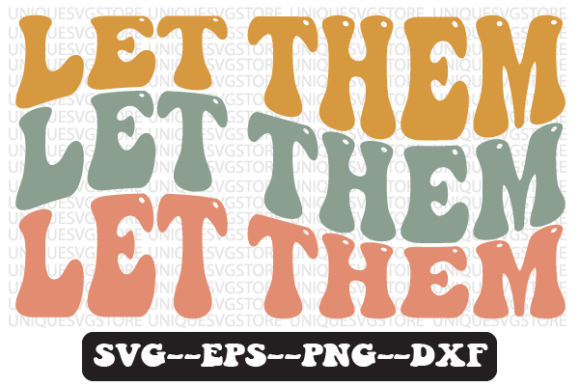
Let Them Wavy Retro Svg Design Review
When I first opened the folder for Let Them Wavy Retro Svg Design, I didn't just see a file; I saw a mood. As someone who spends hours tweaking stitch density and selecting thread colors for client projects, my initial reaction is always about versatility. This design immediately brings to mind the groovy, free-spirited energy of the late 60s and early 70s. The wavy lines are fluid and organic, avoiding the rigid geometry that often plagues retro-inspired digital assets. It feels like something that would sit perfectly on a vintage-style tote bag or a soft baby onesie, but I needed to know if it could hold up under the needle of a machine embroidery setup.
The core appeal of this piece lies in its simplicity. In the world of machine embroidery design, less is almost always more. A design with too many intricate details can get lost when stitched onto fabric, especially if you are working with smaller hoop sizes or textured materials. Let Them Wavy Retro Svg Design strikes a balance that is rare to find. The curves are bold enough to be seen from a distance, yet they possess a delicate quality that suggests a handmade touch rather than a mass-produced print. For an Etsy seller or a small shop owner looking to create unique handmade product listings, this visual personality is a strong asset.
Real-World Application: From Screen to Stitch
Let's talk about how this actually performs when you move it from your screen to a physical item. I recently tested a similar workflow for a custom order involving a linen apron for a local bakery. The client wanted something cheerful but not overwhelming. While this specific design is listed as a sublimation-ready SVG, the vector nature means it translates beautifully into an embroidery file if converted correctly. Imagine taking these wavy lines and converting them into satin stitches for a border on a kitchen towel or a running stitch pattern for a decorative patch.
The layout is particularly forgiving. When placing an embroidery project on a curved surface like a cap or a sweatshirt chest area, alignment can be a nightmare. However, the flowing nature of the waves allows for some creative freedom. You aren't forced to center everything perfectly because the eye follows the movement of the line. This makes it an excellent choice for custom apparel where the wearer might want a slightly off-center, relaxed look. For baby embroidery on a blanket or a bib, the soft curves feel gentle and safe, avoiding any sharp angles that might look aggressive in a nursery setting.
I also considered using this for holiday embroidery. The retro vibe fits perfectly with mid-century modern Christmas decor. If you were to stitch this in a festive red and white thread combination on a dark green pillow cover, the contrast would pop without needing complex shading. It adds a layer of sophistication that elevates a simple gift into something that feels curated and thoughtful. Customers today are looking for items that tell a story, and a design with such distinct character helps build that narrative instantly.
Where to Exercise Caution
While the design is versatile, there are specific scenarios where Let Them Wavy Retro Svg Design requires careful handling. One major consideration is the texture of the fabric. If you plan to use this on a thick, looped terry cloth or a heavily distressed denim jacket, the fine details of the wave might get swallowed by the pile of the material. In these cases, a heavier stitch density is required, which can sometimes lead to puckering if not managed with the right stabilizer.
Another critical factor is the size of the hoop. If you are attempting to stitch this on a small patch or a tiny detail on a hat, the curves need to remain smooth. If the resolution of the digitization isn't high enough, those waves can turn into jagged stairs rather than fluid lines. Always test the design on scrap fabric first to ensure the curve interpolation holds up. Additionally, if you are working with stretchy fabrics like jersey knit for t-shirt design, you must use a tear-away or cut-away stabilizer to prevent the garment from distorting during the stitching process. Without proper support, the tension of the threads could pull the fabric out of shape, ruining the intended retro aesthetic.
Dense stitch areas can also be tricky. If you decide to fill the entire shape with satin stitches, the resulting bulk might be too stiff for a comfortable wearable item like a baby outfit. In such instances, switching to a fill stitch or a combination of running stitches might yield a softer result. It is also worth noting that on dark fabrics, light-colored threads can sometimes appear washed out unless you use a higher thread count or add a background underlay. Testing thread color contrast is essential before committing to a full production run.
Impact on Brand and Customer Trust
In the competitive landscape of craft business and Etsy seller marketplaces, the quality of your finished product speaks volumes about your brand consistency. A well-executed digital embroidery file like this one can significantly boost buyer engagement. When a customer receives a personalized gift or a boutique product that looks professionally stitched, it builds trust. They are more likely to leave a positive review and return for future purchases.
This design has a "recognizable" quality that works well for branding. Whether you are creating a logo for a coffee shop or a signature element for a line of home goods, the wavy motif creates a cohesive visual language. It signals creativity and attention to detail. However, professionalism is key. If the design is poorly digitized, with loose threads or uneven spacing, it can undermine the perceived value of your work. That is why checking the stitch density and inspecting small details before finalizing the finished product is non-negotiable.
For those selling design assets or using this for commercial projects, the flexibility of the vector format (SVG) is a huge plus. You can scale it up for a large banner or down for a small button without losing quality. This adaptability is crucial for maintaining a professional image across different marketing channels, from printable mockups to actual physical goods.
Practical Designer Notes for Success
If you are ready to incorporate Let Them Wavy Retro Svg Design into your workflow, here are a few final tips to ensure success. First, always confirm the licensing terms before selling finished items or distributing the digital files. Understanding whether you have rights for commercial use is vital for protecting your small shop product business.
Second, pay close attention to the conversion process. Since the source is an SVG, ensure that when you convert it to a machine-readable format, the paths are clean and closed. Gaps in the lines can cause threading issues or incomplete fills. Third, experiment with different thread colors. The retro theme pairs well with earth tones, pastels, or high-contrast neons depending on the vibe you want to achieve. Don't be afraid to mix textures, perhaps combining satin stitch for the main outline with a fill stitch for the interior.
Finally, remember that testing is your best friend. Create a printable mockup of the design on various backgrounds to visualize the final look. Then, stitch a sample on the actual fabric you intend to use. Check for puckering, thread breaks, and overall clarity. By following these steps, you can transform a simple vector graphic into a stunning piece of embroidery art that stands out in the crowded marketplace of graphics and crafts.
Ultimately, Let Them Wavy Retro Svg Design offers a solid foundation for a wide range of creative endeavors. Its retro charm is timeless, and its structural simplicity makes it adaptable to almost any medium. With the right technique and attention to detail, it can elevate your next project from a hobbyist craft to a professional offering that customers will love.