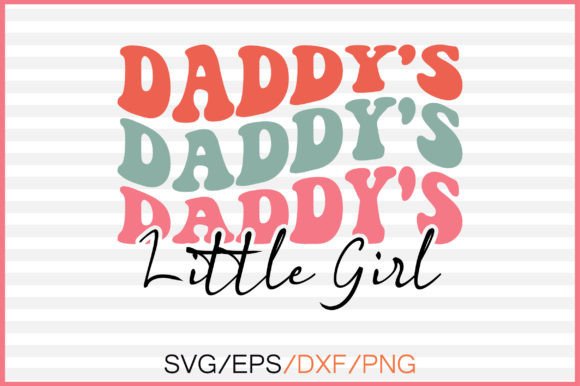
Daddy s Little Princess Retro Svg Review
When I first opened the folder for Daddy s Little Princess Retro Svg, my immediate reaction was less about the file formats and more about the mood it set. In a sea of generic floral patterns and standard script fonts, this design carries a distinct vintage personality. It feels like a badge from a bygone era, perfect for the maker who wants to inject nostalgia into their custom apparel or boutique items without looking dated. As someone who has spent years testing embroidery files for real-world production, I look past the pretty preview image to see how the stitches will actually behave on fabric. This review is not just a description; it is a practical breakdown of how this digital embroidery file performs when moved from the screen to the hoop.
The First Stitch: Visual Personality and Layout
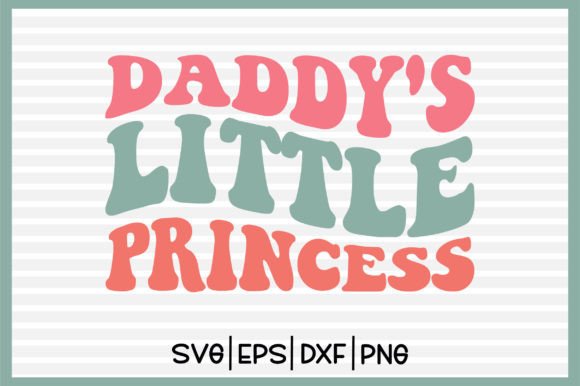
The retro aesthetic of Daddy s Little Princess Retro Svg suggests a specific target audience immediately. It speaks to parents who value a blend of modern sentimentality with classic design elements. The layout appears balanced, avoiding the clutter that often ruins machine embroidery designs. When I visualize this on a garment, the curves feel forgiving, which is crucial for maintaining stitch integrity. Unlike rigid geometric shapes that can cause thread breaks on curved surfaces, this design seems to flow naturally.
For an Etsy seller or a small business owner, the visual appeal translates directly to product value. A well-executed embroidery project builds customer trust instantly. If the design looks crisp and professional, buyers assume the quality of the entire item is high. The "retro" vibe adds a layer of uniqueness that helps your listing stand out in a crowded marketplace. It transforms a simple handmade product into something that feels curated and intentional. Whether you are creating a tote bag design or a nursery decor piece, the design assets here provide a strong foundation for brand consistency.
Real-World Application: From Screen to Sweatshirt
To truly understand the utility of Daddy s Little Princess Retro Svg, imagine a scenario where you are preparing for a busy holiday season. You have a client who wants a personalized gift for their daughter's first birthday. They request something unique for a cozy sweatshirt. You decide to use this design because of its nostalgic charm. The process begins with selecting the right thread colors. The retro style pairs beautifully with muted tones like sage green, dusty rose, or cream against navy backgrounds.
Once the design is loaded into your machine, the stitch types come into play. The lettering likely relies on a combination of satin stitch for smooth edges and running stitch for delicate details. If the design includes fill areas, the fill stitch density must be appropriate for the fabric weight. For a heavy cotton sweatshirt, a slightly denser fill holds up well, but for a lightweight tee, you need to ensure the stitch density isn't too heavy, or the fabric might pucker. In this scenario, the finished product would look polished, making the personalized gift feel expensive and thoughtful. The design works equally well on a baby onesie, where the softness of the baby embroidery contrasts nicely with the bold retro graphics.
I also considered using this for a commercial line of aprons or kitchen towels. The theme fits perfectly for a "princess" themed party or a family gathering. The versatility allows it to be used on various substrates, turning it into a reliable asset for a craft business. However, success depends on execution. A poorly stabilized embroidery project can ruin even the best design. Using the correct stabilizer is non-negotiable here to maintain the sharpness of the retro lines.
Navigating Challenges: Where Caution is Key
While Daddy s Little Princess Retro Svg offers great potential, no design is without its challenges. One area requiring careful attention is the hoop size. If you attempt to stitch this on a very small surface, such as a cap brim or a tiny patch, the details may become indistinguishable. Small letters or intricate corners can get lost if the resolution of the embroidery file does not match the physical space available. Always test the design in a printable mockup at the intended size before cutting any fabric.
Fabric texture is another critical factor. On stretchy fabrics like jersey knits, the tension required for satin stitch can cause distortion. Similarly, textured fabrics like terry cloth or boucle can hide the finer details of the design, making it look muddy rather than crisp. Dark fabrics present a different hurdle; they require a higher contrast in thread colors to ensure the design pops. If the design features thin lines, they might disappear against a black background unless you choose a bright, metallic, or white thread carefully.
Another consideration is durability. If you are producing items for frequent washing, such as children's clothing or work aprons, you must inspect the finished product for loose threads. Dense stitch areas can sometimes trap lint or wear down faster if the underlay isn't sufficient. For commercial embroidery projects intended for resale, these factors determine whether a customer returns for more or leaves a negative review. The design should be robust enough to withstand the rigors of daily use while retaining its visual appeal.
Designer Notes for Professional Results
Before committing to a full production run, I strongly advise running a test on scrap fabric. This step is essential to check thread color contrast and to verify that the stitch density sits correctly. You should also inspect the design in black and white mockups to ensure the composition works regardless of color. Confirming the hoop size limits early prevents wasted time and material later.
Always review the included formats. Since the download contains SVG, EPS, DXF, and PNG, you have flexibility for both digital marketing and physical stitching. However, remember that vector files (SVG, EPS) are for cutting or resizing, while DXF is typically for embroidery machines. Ensure you are using the correct file type for your specific workflow. Check the licensing terms explicitly; some design assets allow personal use but restrict commercial sales of finished items. As a creative entrepreneur, protecting your business means understanding exactly what you are allowed to sell.
Finally, consider the end-user experience. A handmade product with a well-executed embroidery project creates an emotional connection. When a parent sees Daddy s Little Princess Retro Svg stitched perfectly onto a child's outfit, they see love and effort. That feeling drives repeat customers and positive word-of-mouth for your crafter business. By paying attention to stabilizers, thread choices, and fabric selection, you ensure that the design lives up to its promise. Whether you are a hobbyist making gifts or an Etsy seller scaling a shop, this design has the potential to be a standout piece in your portfolio.
In conclusion, Daddy s Little Princess Retro Svg is more than just a graphic; it is a versatile tool for the modern maker. It balances aesthetic charm with practical application, provided you approach it with the care and technical knowledge expected of a professional. Use it wisely, test thoroughly, and watch your small shop products shine.